
India has one of the most extraordinary rug-weaving traditions in the world. From the Mughal emperor Akbar’s establishment of royal weaving workshops in the 16th century to the celebrated production centers of Agra, Jaipur, and Kashmir today, Indian rugs have consistently represented some of the finest handmade textile craftsmanship available anywhere.
At Rug Source, Indian rugs make up a significant and beloved portion of our collection. Their range is remarkable: from palace-quality hand-knotted silk rugs to bold dhurrie flatweaves to exuberantly patterned hand-tufted wool pieces. This guide will introduce you to the world of Indian rugs and help you find the style that’s right for your home.
The History of Indian Rug Weaving

Indian rug weaving was elevated to an art form under the Mughal emperors in the 16th century. Emperor Akbar brought Persian master weavers to India to establish workshops in Agra, Lahore, and Fatehpur Sikri, and the resulting fusion of Persian tradition with Indian sensibility produced a distinctly Indian rug aesthetic: lush floral patterns, rich color palettes, and a sensuousness of design that reflects the abundance of the natural world.
That tradition has been passed down continuously for over 400 years. Today, India is one of the world’s largest producers of handmade rugs, employing millions of skilled weavers and exporting rugs to every continent.
Major Indian Rug Weaving Regions
Agra
Once a Mughal royal capital, Agra produces some of India’s finest hand-knotted rugs. Agra rugs are known for their bold scale, rich color, and Mughal-inspired floral patterns. Both antique Agra rugs and contemporary productions from this city are highly regarded.
Jaipur
The most prolific production center for hand-knotted and hand-tufted wool rugs in India. Jaipur rugs are known for their exceptional quality control, wide range of styles, and ability to interpret both traditional and contemporary designs with equal skill. This is where most of the hand-tufted wool rugs available in the market today originate.
Kashmir
Producing some of the finest silk and silk-on-silk hand-knotted rugs in the world. Kashmiri rugs are comparable in quality to the finest Persian pieces and feature extraordinarily fine weaving with exceptionally high knot counts.
Bhadohi and Mirzapur
Together, these cities in Uttar Pradesh form one of the world’s largest rug production clusters, producing a wide range of hand-knotted and machine-made rugs in both traditional and contemporary styles.
Indian Rug Styles
- Mughal floral: Intricate, all-over floral patterns inspired by Mughal garden imagery. Rich colors, fine detail, and luxurious wool or silk pile.
- Indo-Persian: Indian interpretations of Persian medallion and hunting carpet designs. These rugs combine Persian compositional tradition with India’s bolder color sensibility.
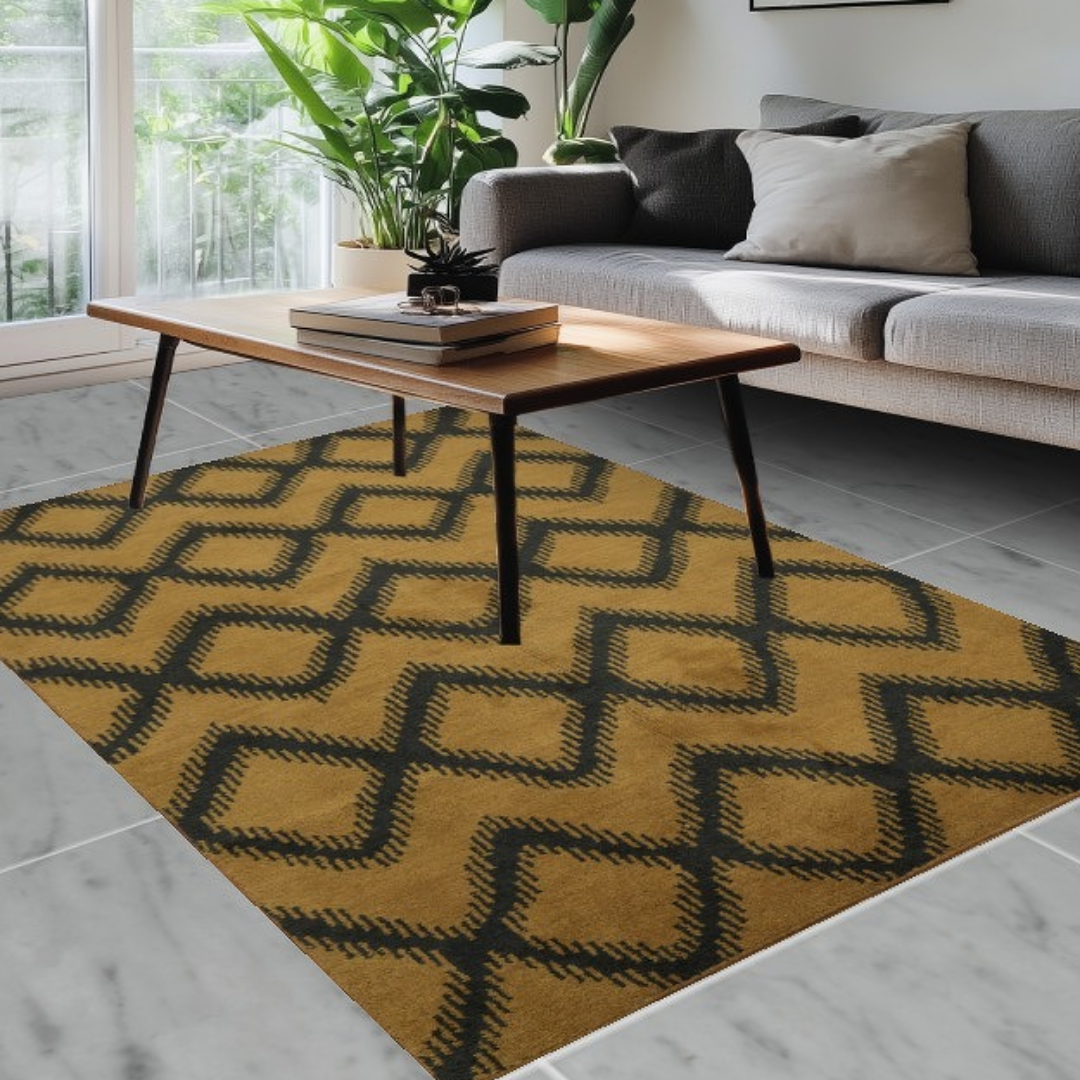
- Dhurrie: Indian flatweave rugs made from cotton or wool. Lightweight, reversible, and highly durable. Dhurries feature bold geometric or striped patterns and are ideal for casual, high-traffic spaces.
- Contemporary Indian: India’s workshops are highly skilled at producing contemporary designs in any style. Modern geometric, abstract, and transitional rugs produced in Jaipur are among the most popular in the current market.
- Tibetan-style: Produced in Nepal and parts of northern India, these rugs feature distinctive geometric patterns and use Tibetan highland wool, which is among the thickest and most durable available.
What Makes Indian Rugs Special

- Depth of tradition: 400 years of continuous weaving tradition means Indian artisans have mastered every aspect of rug production.
- Quality of wool: India sources high-quality wool from New Zealand and Afghanistan for its finest productions. New Zealand wool is particularly prized for its softness and luster.
- Range of price points: India produces everything from accessible hand-tufted wool rugs to museum-quality hand-knotted silk pieces, giving buyers at every budget access to genuine Indian craftsmanship.
- Adaptability: Indian workshops are exceptionally skilled at producing rugs in any style, making them the source of choice for contemporary interpretations of traditional designs.
Sizing Guide for Indian Rugs
- Living room: 8×10 or 9×12. All front furniture legs are on the rug at a minimum.
- Dining room: 8×10 or 9×12, extending 24 to 30 inches beyond the table on all sides.
- Bedroom: 8×10 under the bed with 18 to 24 inches extending on the sides and foot.
- Accent areas: 5×7 or 5×8 for bedrooms, offices, and entryways.
Caring for Indian Rugs
- Vacuum regularly: Suction only for hand-knotted and hand-tufted pieces. Beater bar is acceptable for durable dhurrie flatweaves.
- Rotate every 6 to 12 months: Ensures even wear and prevents uneven fading.
- Blot spills immediately: Blot with a clean white cloth, never rub.
- Professional cleaning: Every 1 to 3 years, depending on traffic and household conditions.
Frequently Asked Questions About Indian Rugs
Are Indian rugs as good as Persian rugs?
The finest Indian hand-knotted rugs from Kashmir and Agra are comparable in quality to high-end Persian rugs and have been valued as luxury objects for centuries. In terms of variety, price range, and contemporary design capability, Indian rugs actually have an edge.
What is the most popular Indian rug style?
Contemporary Indo-Persian and transitional designs from Jaipur are currently among the most popular Indian rugs in the market, combining traditional craftsmanship with palettes and patterns that suit modern homes.
How do I know if an Indian rug is hand-knotted?
Turn it over. A hand-knotted rug will show visible individual knots on the back, with the pattern mirrored clearly. A hand-tufted rug will have a canvas or fabric backing.
Shop Indian Rugs at Rug Source
From the lush floral grandeur of a Mughal-inspired hand-knotted masterpiece to the casual geometric charm of a Jaipur flatweave, Indian rugs offer something extraordinary for every home and every budget. At Rug Source, our collection reflects the full depth and range of this remarkable tradition.
Browse our full collection of Indian rugs at RugSource.com. Free shipping on every order.


